Ask
Dr. Dunc. Responses
Life's A Twitch! ®
|
|
Life's A Twitch! ® |
|
If you are a new visitor, diagnosed with a difference, please read this introduction letter to you. For all other new visitors, Dr. McKinlay also has a special introduction letter to you.
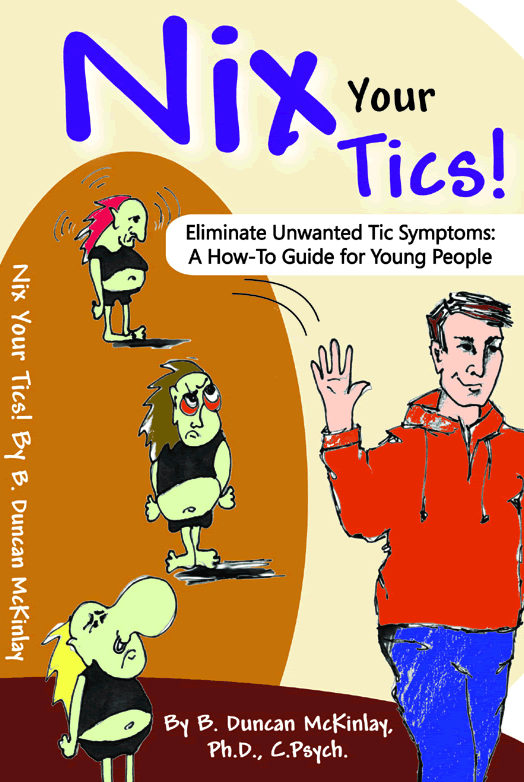
Nix Your Tics! The Second To watch the Life's A Twitch! documentary via streaming video, click here. If you would like to reprint writings from this site, please click here.
If you wish to return to the 'Ask Dr. Dunc.' mainpage, please click here If you wish to visit the 'Ask Dr. Dunc.' question archives, please click here
|
|
|||
|
| Home | Youth Haven | Ask Dr. Dunc | |||
| Disclaimer | Contact |
http://www.lifesatwitch.com/response89.html |
Last updated
on March 25, 2022
|
|
© 1998 - 2020. Life's A Twitch!® & design are registered trademarks of B. Duncan McKinlay, Ph.D., C.Psych. (Retired) All activities related to Life's A Twitch!® are conducted by B. Duncan McKinlay, Ph.D., C.Psych. (Retired) in a private capacity and do not represent the Ministry of Children and Youth Services or the Government of Ontario. |
Dr. B. Duncan McKinlay's Life's A Twitch!® Site on Tourette Syndrome & Associated Disorders