Accolades - Print Profiles
Life's A Twitch! ®
|
|
Life's A Twitch! ® |
|
If you are a new visitor, diagnosed with a difference, please read this introduction letter to you. For all other new visitors, Dr. McKinlay also has a special introduction letter to you.
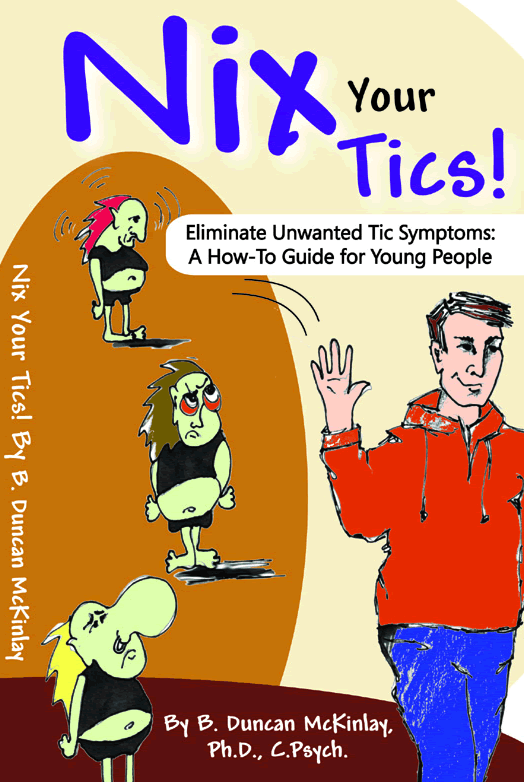
Nix Your Tics! The Second To watch the Life's A Twitch! documentary via streaming video, click here. If you would like to reprint writings from this site, please click here.
To return to the 'Print Profiles' archive page, please click here.
|
|
|||
|
|
| Home | Youth Haven | Ask Dr. Dunc | |||
| Disclaimer | Contact |
http://www.lifesatwitch.com/uw_alumni.html |
Last updated
on March 25, 2022
|
|
© 1998 - 2020. Life's A Twitch!® & design are registered trademarks of B. Duncan McKinlay, Ph.D., C.Psych. (Retired) All activities related to Life's A Twitch!® are conducted by B. Duncan McKinlay, Ph.D., C.Psych. (Retired) in a private capacity and do not represent the Ministry of Children and Youth Services or the Government of Ontario. |
Dr. B. Duncan McKinlay's Life's A Twitch!® Site on Tourette Syndrome & Associated Disorders